
Aluminium Door
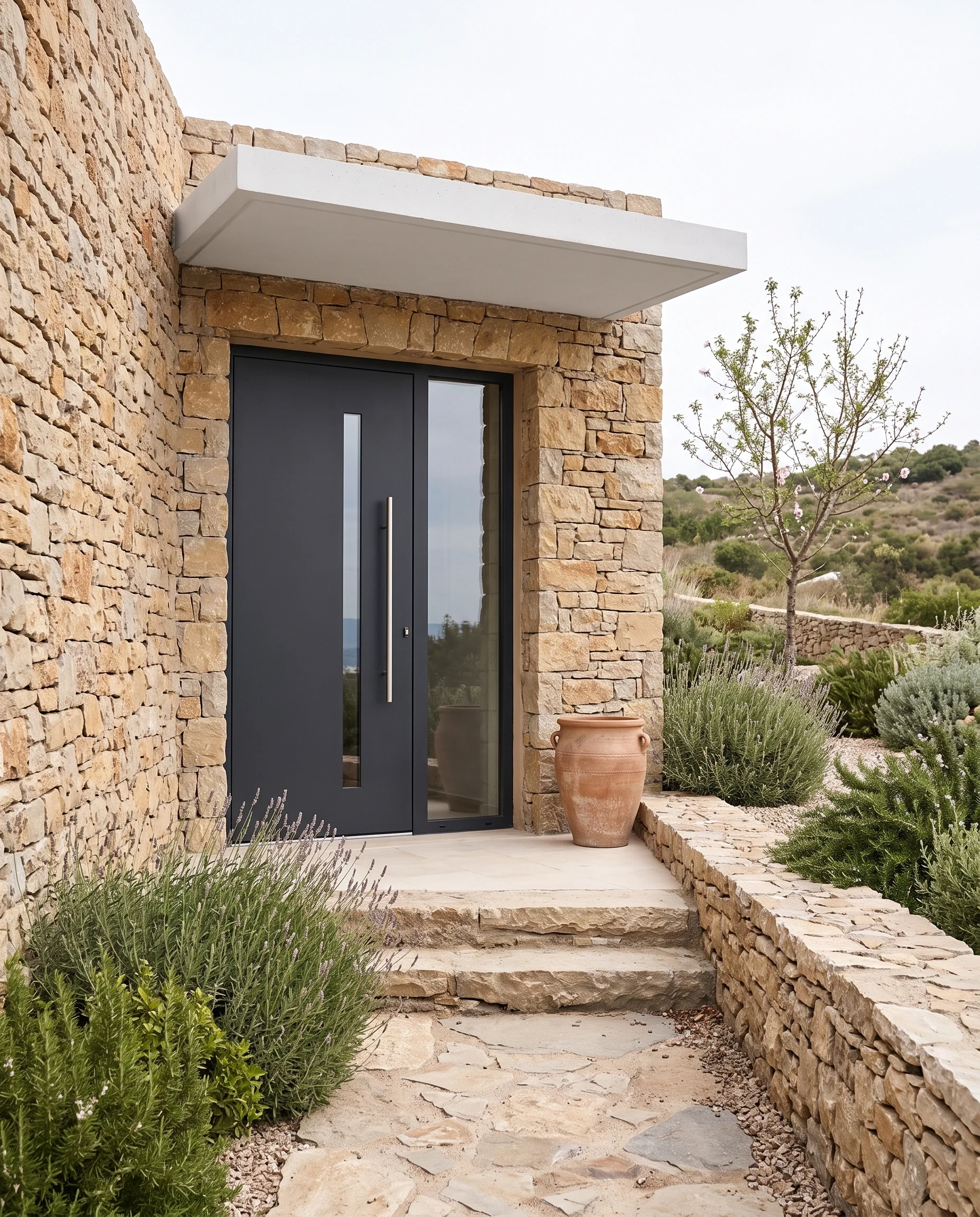
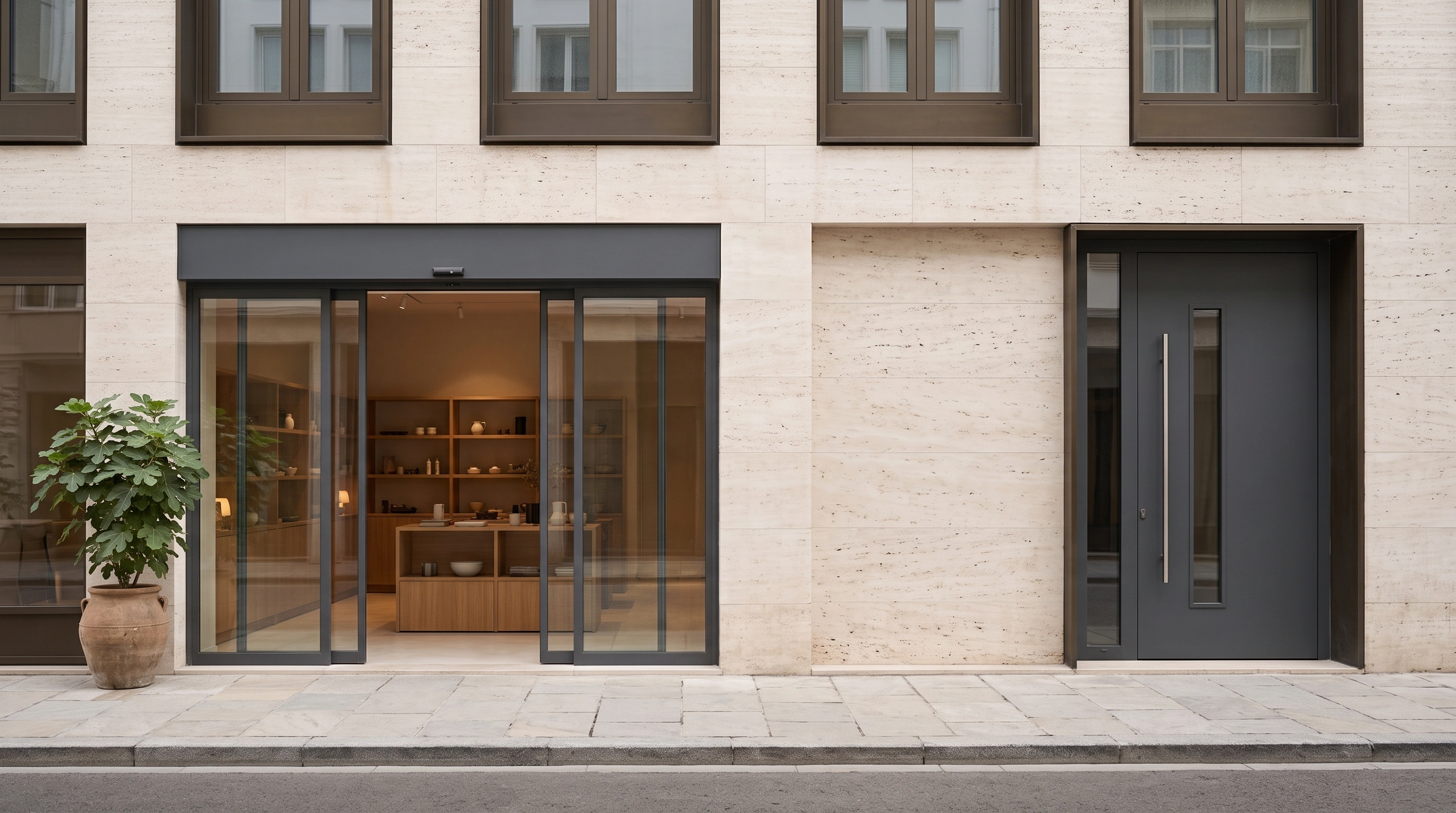
A manually opened door with an aluminium frame and leaf, for homes, offices and shop entrances.
How it works
The leaf is hung on hinges and opened by hand with a handle or pull bar, then locked. It can be glazed or fitted with a solid panel. Exterior entrances call for thermally broken profiles and double glazing; interiors can use slimmer profiles. No power or drive unit is needed.
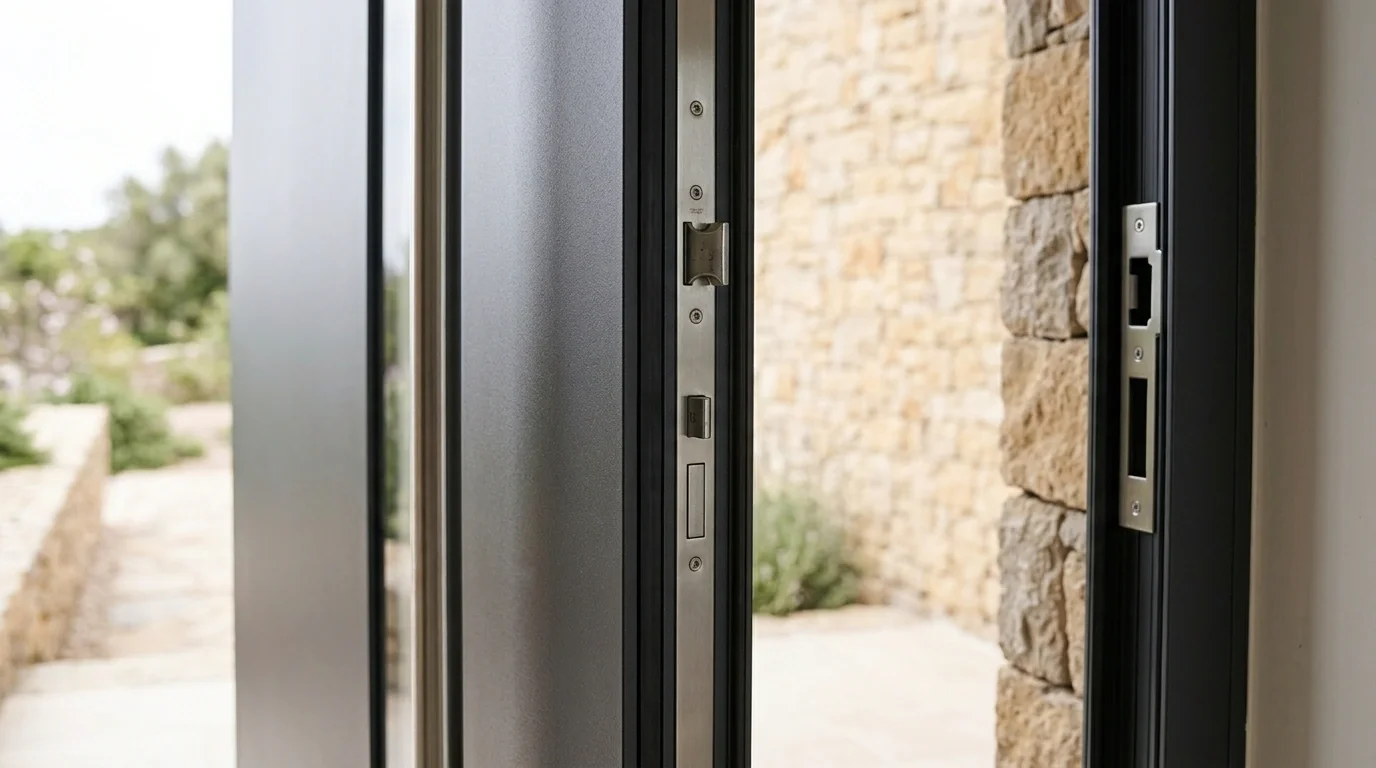
No power or drive unit needed
Aluminium resists damp and does not rust
Glazed leaf lets daylight into the entrance
Built for frequently used entrances
One material, three  different doors
Profile, infill and hardware are chosen according to where the door is used. These are typical set-ups; exact hardware is decided at the site survey.
Insulation starts inside the profile
Aluminium conducts heat well. In exterior doors an insulating strip separates the inner and outer profile; the door's insulation depends on this strip and the seals as much as on the glass.
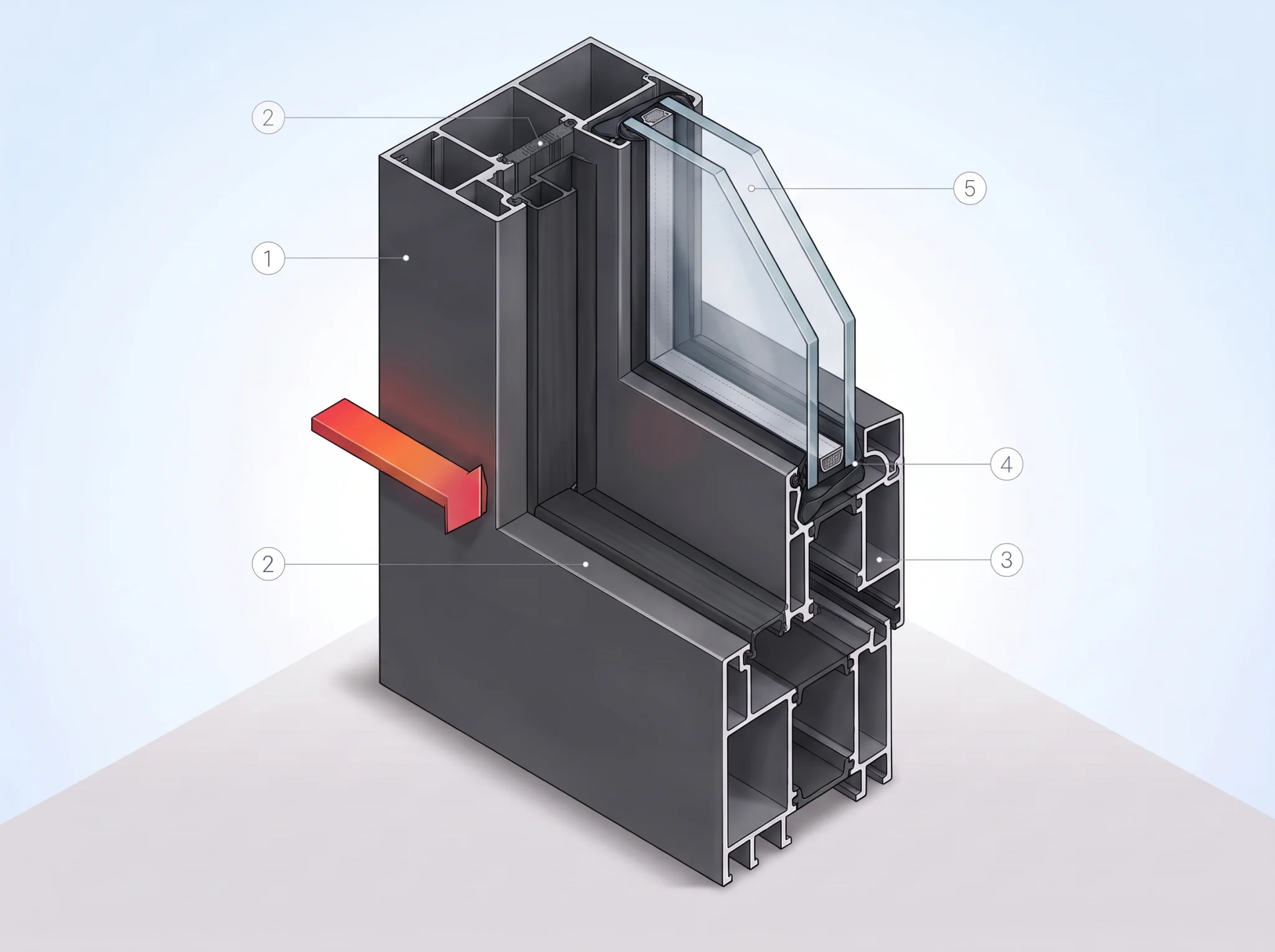
- 1Outer profileFaces rain and sun; its colour matches the façade.
- 2Thermal breakInsulating strip between inner and outer profile; cuts heat flow.
- 3Inner profileKept apart from the outside cold, so less condensation forms indoors in winter.
- 4SealsKeep air, water and dust out between frame and leaf.
- 5Double glazing or insulated panelThe cavity between panes, or the panel's insulating core, insulates the middle of the leaf.
Interior doors do not need this strip; a non-insulated profile is enough.
System options
The options below are assessed per project; which ones apply is decided at the site survey.
Technical specifications
- Material
- Extruded aluminium frame and leaf
- Thermal insulation
- Thermally broken profiles outside, non-insulated series indoors
- Thermal break
- In thermally broken series, an insulating strip between inner and outer profile; series set per project
- Infill
- Glass or panel; type per project
- Opening
- Hinged; number of leaves and opening direction per project
- Seals
- Gaskets between frame and leaf
Glass and aluminium since 1940.
One dedicated partner from survey to installation.
2-year system warranty
Production in Adana, showroom in France.
Glass Factory and Architectural Factory in Seyhan, Adana; showroom and warehouse in Bondoufle.
Frequently asked questions about aluminium doors
On large dark doors in full sun, the outer profile heats up and expands much more than the inner one; the leaf can bow slightly and become hard to lock. These doors use a thermal break that lets the two shells expand independently and a durable coating; a lighter colour is also an option on very sunny façades.
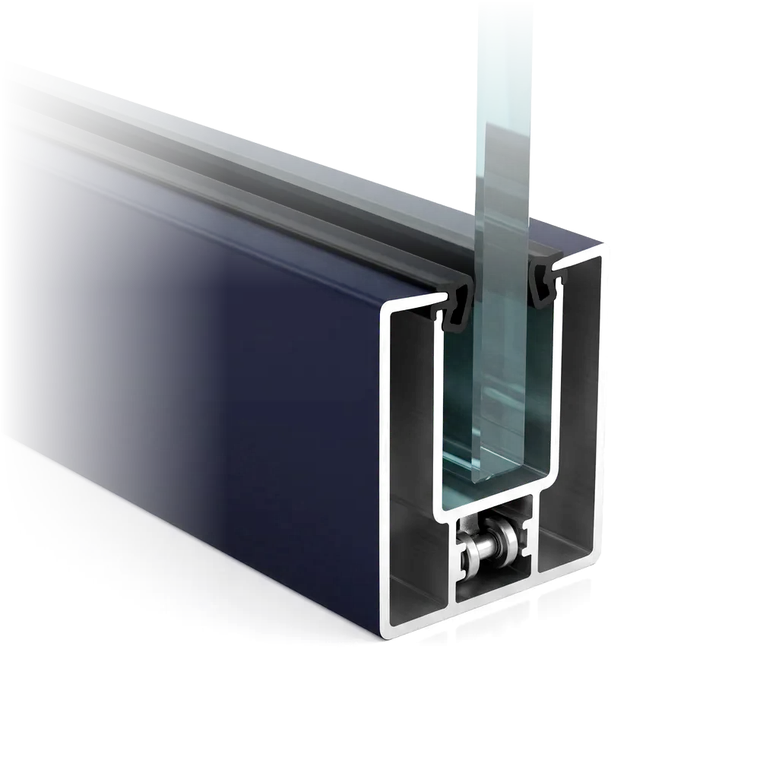
No. A glass balcony system is designed to enclose a balcony or terrace; even in its double-glazed versions it does not do the job of an entrance door's frame, lock and hardware. Use an aluminium door for an entrance into the home and a glass balcony to enclose the balcony.
It depends on the profile. For exterior entrances, thermally broken systems, where an insulating strip separates the inner and outer profile, are used with double glazing; this reduces heat loss and condensation on the inside. Non-insulated profiles suit interiors and unheated spaces. A door's insulation depends on its frame and seals, not only on the glass.
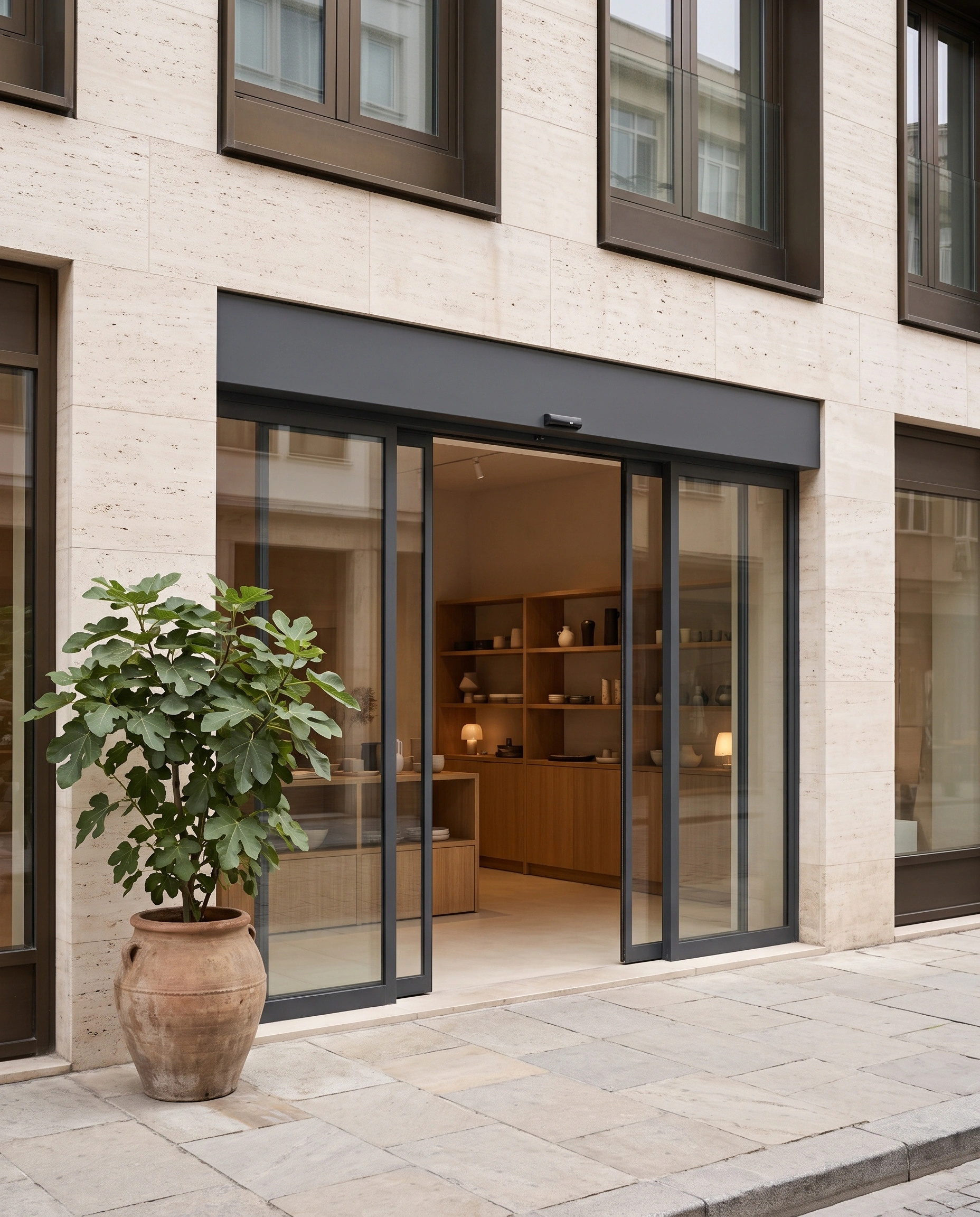
Look at how many people use the entrance each day. In a busy shop, clinic or hotel, an automatic door makes passage easier and limits heating and cooling losses. For a home, an office or a quieter shop, a manually opened aluminium door is usually enough and needs no power.
The opening size, number of leaves, glass or panel type, frame colour and level of insulation set the price. For an automatic door the drive, sensors, battery and lock are added; for an aluminium door, hardware such as the lock and door closer. The final price is based on measurements taken on site.
SURVEY & QUOTE
Request an On-Site Survey and Quote
Let us choose the right system for your project together; schedule an on-site survey and measurement.