

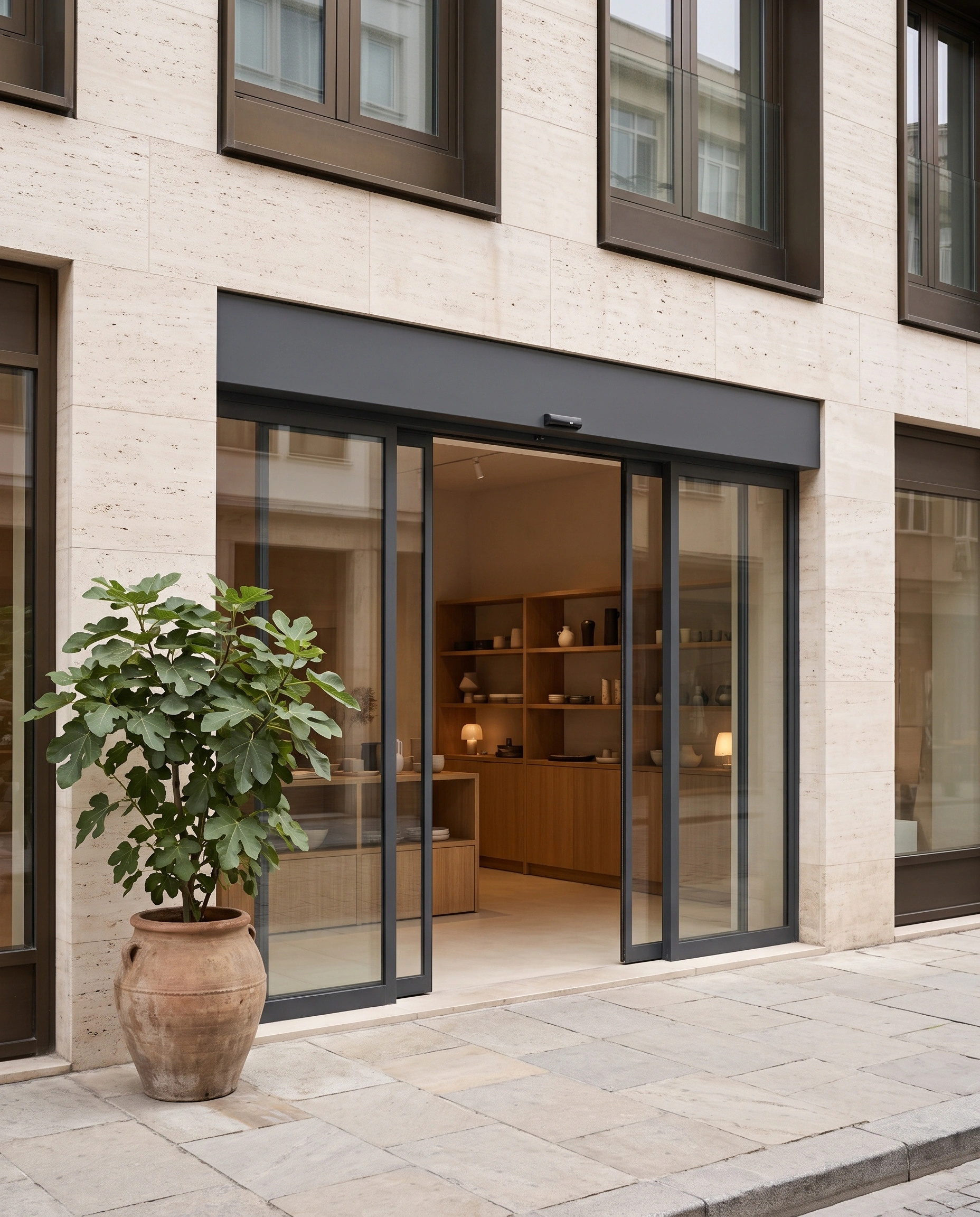
Automatic Sliding Door
An automatic door that detects people approaching and slides open, with its drive hidden above the opening.
How it works
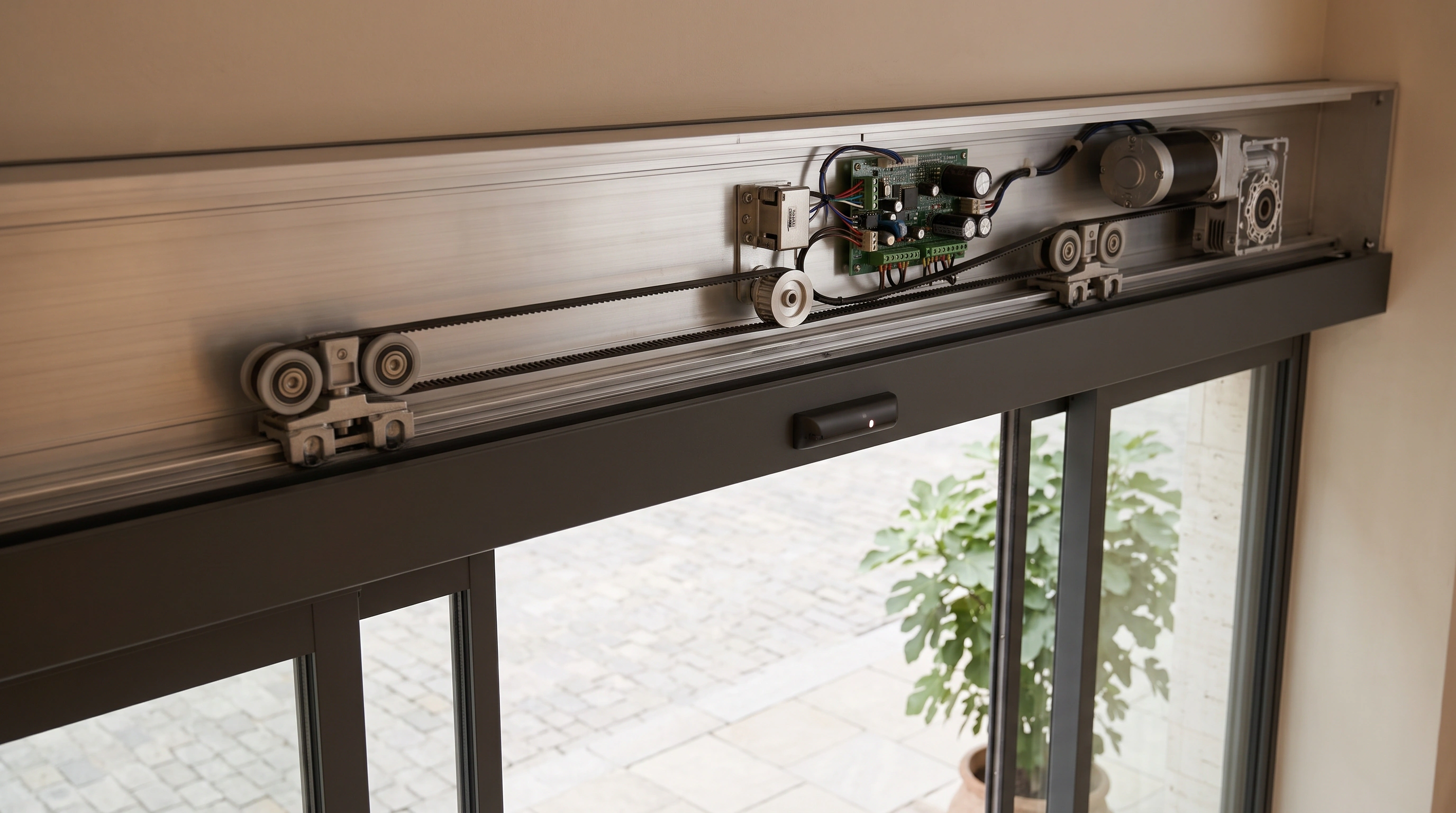
An overhead housing holds the motor, belt and control board; the glass leaves hang on a track inside it and slide smoothly. A motion sensor above detects approaching people and opens the door; a safety sensor on the threshold line stops it from closing while someone or something is in the way. Operating modes depend on the project and the operator selected.
Opens as you approach, closes behind you
Leaves won't close on someone in the way
Opens only briefly, so less heating and cooling is lost
Motor and track hidden above the door
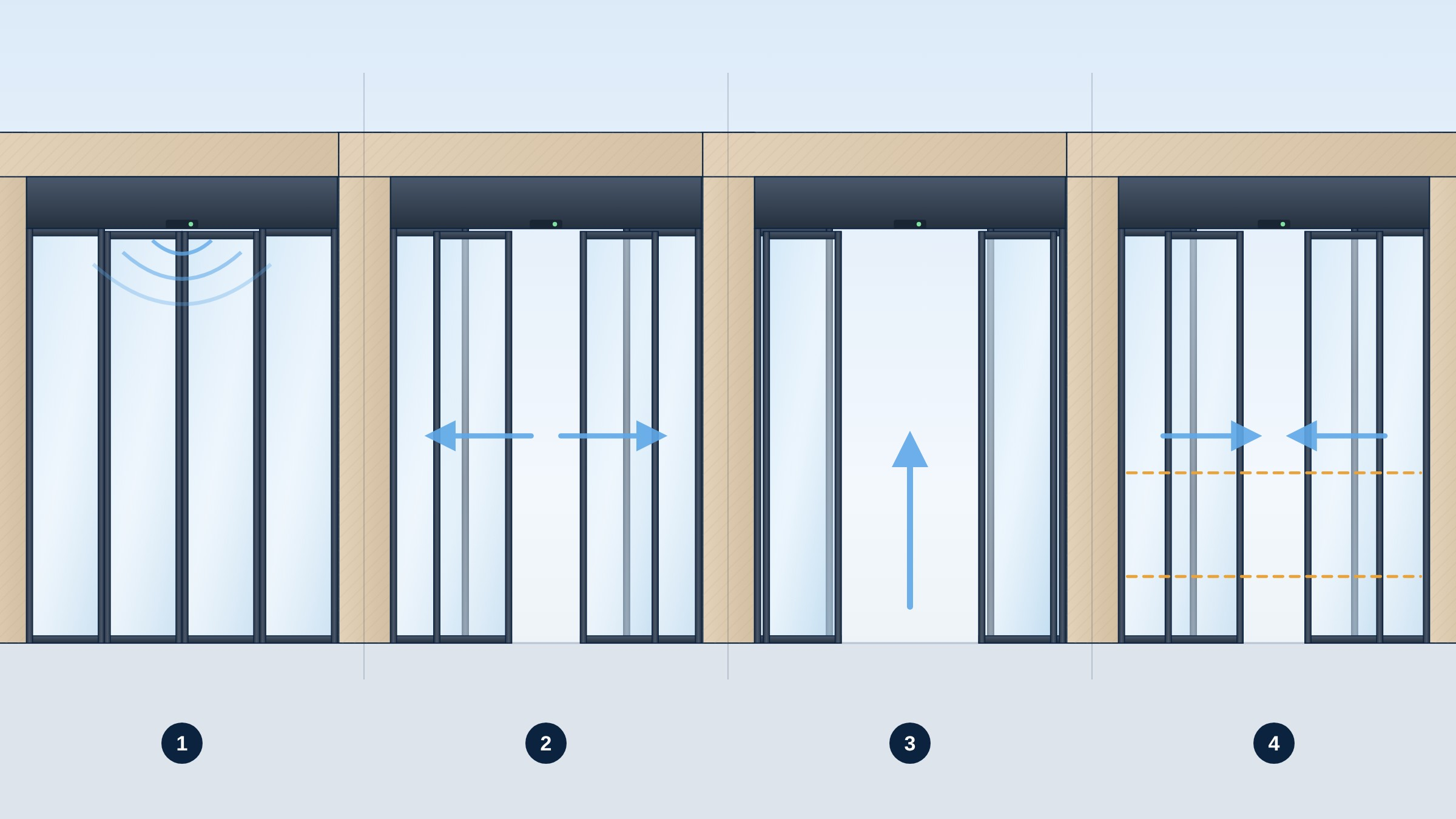
One passage, four steps
Two separate sensors work at the door: one opens it, the other keeps the leaves from closing on people.
Detection
The radar above the door detects someone walking towards it. Direction-sensing radars ignore people walking past along the pavement.
Opening
The motor pulls the leaves sideways along the track by a belt. They slow down as they reach the end.
Passage
A presence sensor scans the leaves' path and does not let them close while someone is in the doorway.
Closing
Once the set hold-open time has passed, the leaves close. If someone approaches while they close, the door reopens.
Single, bi-parting or telescopic?
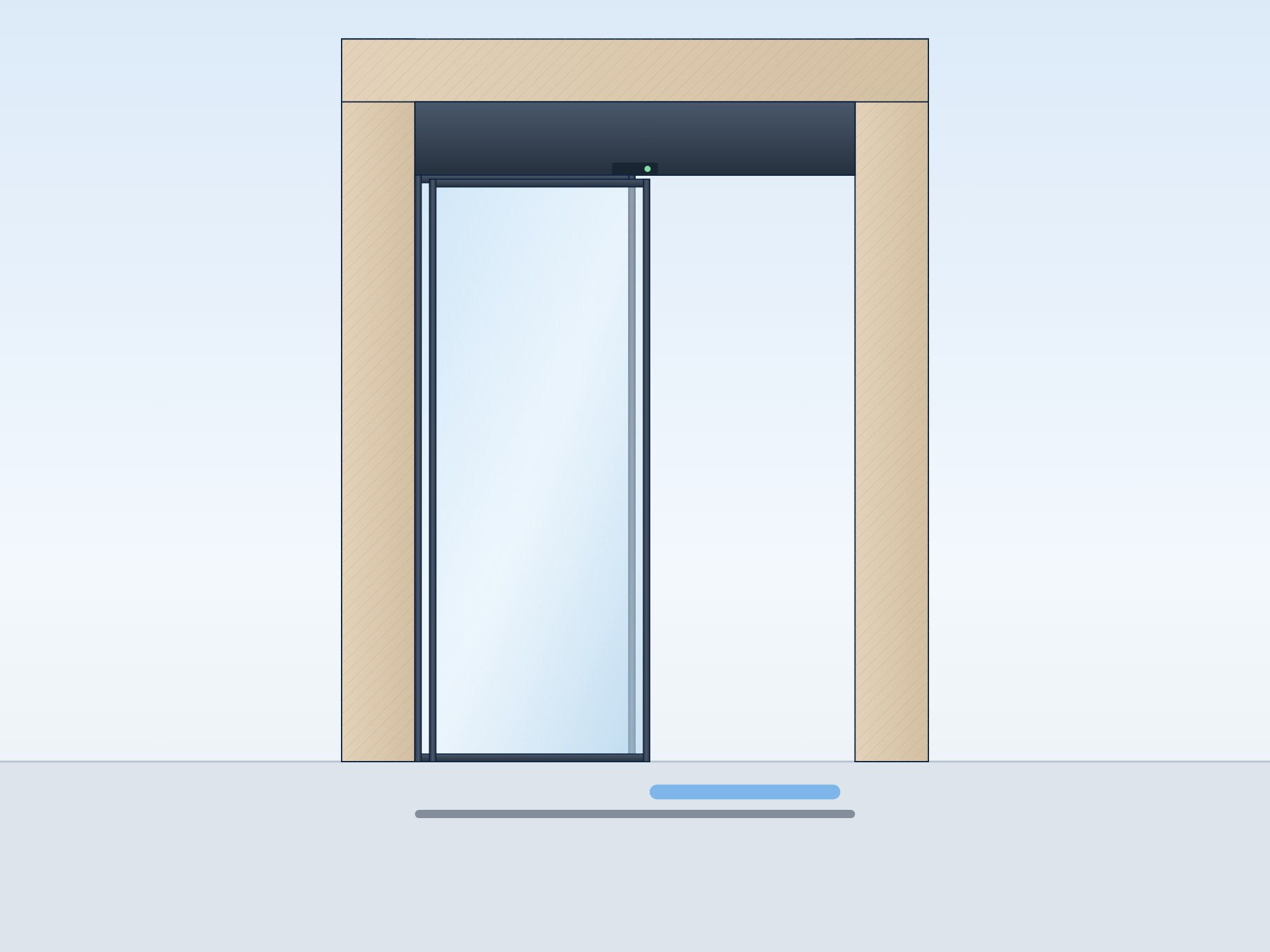
A sliding leaf opens in front of the fixed glass or wall beside it, so the full wall opening never becomes passage. The leaf layout decides how much of it you can use.
Clear opening width depends on the leaf arrangement; the exact figure is measured during the site survey.
One sliding and one fixed leaf. The leaf slides to one side, so it suits entrances with space on one side only.
Modes on the programme selector
Most automatic door operators offer these modes on a programme selector; the modes for your door are set at the site survey.
System options
The options below are assessed per project; which ones apply is decided at the site survey.
Technical specifications
- Leaf layout
- Single leaf or bi-parting; telescopic for narrow openings
- Clear width
- Per project; exact size set at the site survey
- Clear passage
- About half the opening on standard sliding doors, two-thirds if telescopic
- Sensors
- Opening and safety sensors; type set per project
- Leaves
- Aluminium frame with safety glass; glass type set per project
- Operating modes
- Set at the site survey depending on the project and operator
Glass and aluminium since 1940.
One dedicated partner from survey to installation.
2-year system warranty
Production in Adana, showroom in France.
Glass Factory and Architectural Factory in Seyhan, Adana; showroom and warehouse in Bondoufle.
Frequently asked questions about automatic doors
A presence sensor scanning the leaves' path stops the door closing while someone is in the area, and a closing leaf reopens. For this to work, the sensors must be set correctly at installation and tested at every service.
It depends on whether the system has a backup battery and on the type of lock. Battery-backed systems usually open or close the door fully once. Without a battery the door stops where it is; if it is not locked, the leaves can be pushed open by hand. We agree the right setting for your building during the site survey.
Not every automatic door is allowed on an escape route. Fire regulations generally require escape doors to open by hand in the direction of escape, so a standard sliding door is paired with an outward-opening door, or a break-out system is used whose leaves swing open when pushed. Your building's fire safety plan decides which applies.
Direction-sensing radar detects only people walking towards the door and ignores those passing parallel on the pavement or walking away. In winter, partial-opening mode opens the leaves just wide enough for one person. These settings are made during installation to suit the entrance.
The opening size, number of leaves, glass or panel type, frame colour and level of insulation set the price. For an automatic door the drive, sensors, battery and lock are added; for an aluminium door, hardware such as the lock and door closer. The final price is based on measurements taken on site.
SURVEY & QUOTE
Request an On-Site Survey and Quote
Let us choose the right system for your project together; schedule an on-site survey and measurement.