
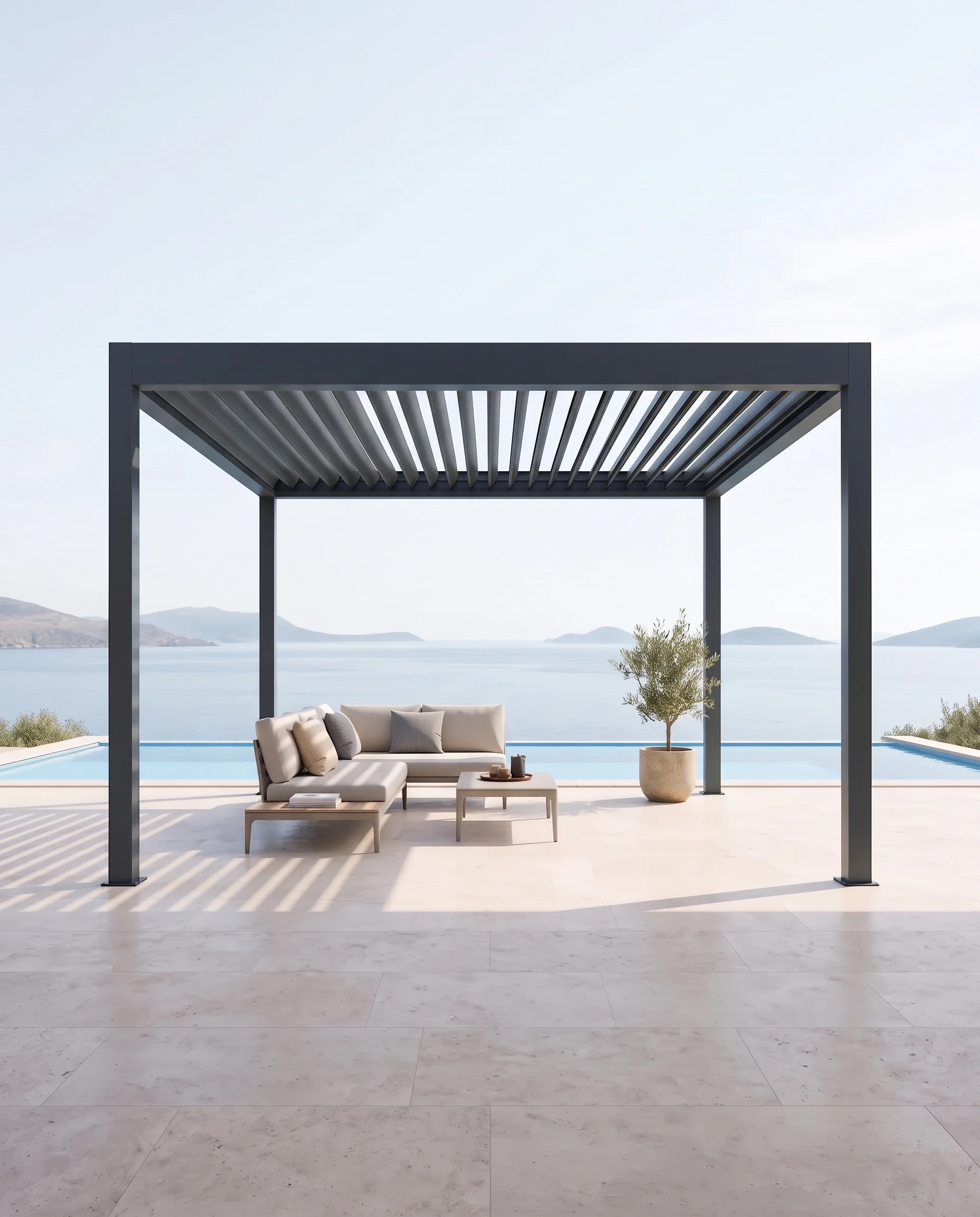
Piston Bioclimatic
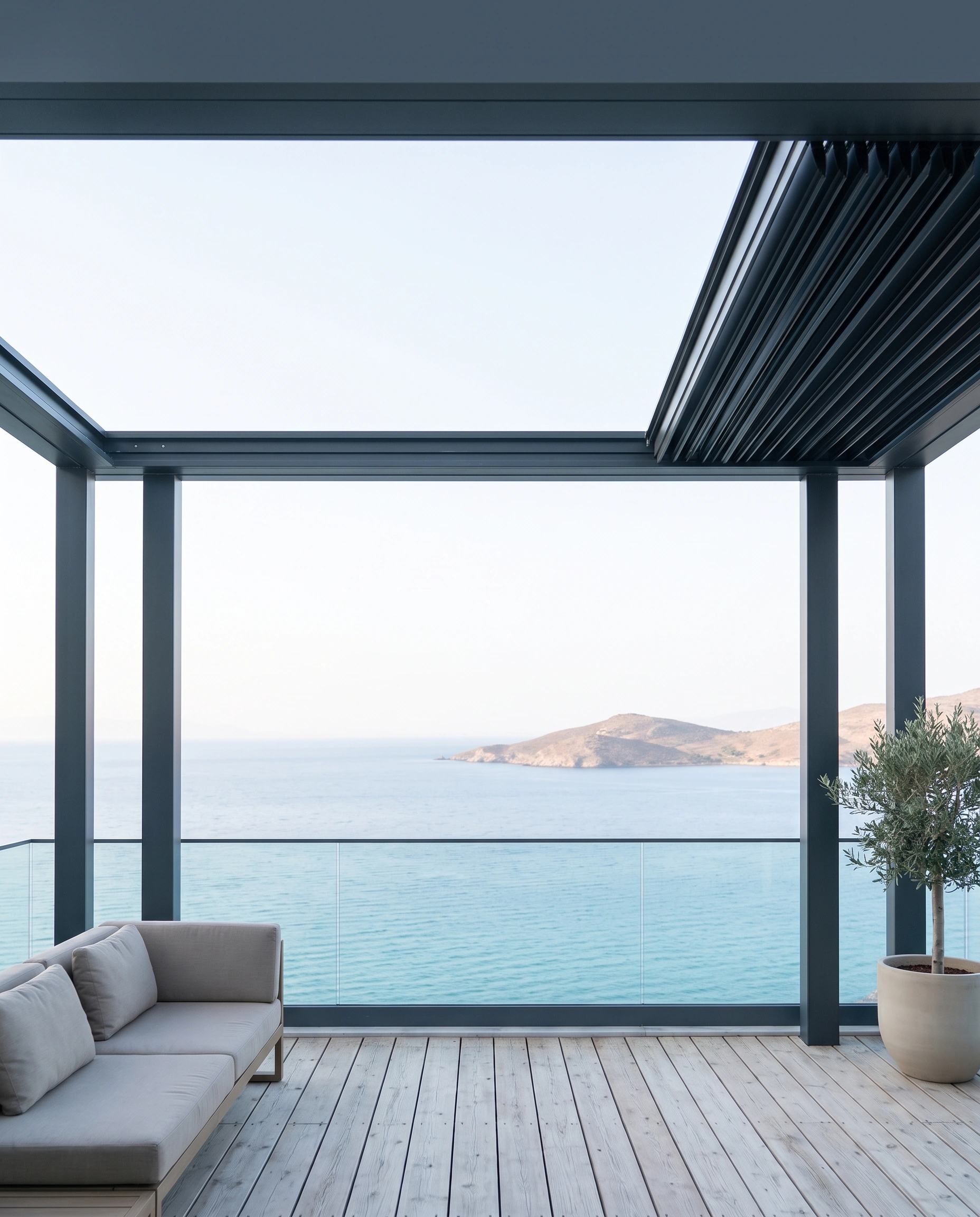
The louvres move on a powerful piston drive and are controlled by remote, phone or building automation.
How it works
The louvres rotate on a piston drive; in between, you change their angle to block the sun or let light in. When closed, EPDM seals keep the rain out and water runs through integrated channels down the posts. You operate it by remote control, or by phone or tablet if your home Wi-Fi reaches the roof.
Powerful piston drive
EPDM seals keep rain out when closed
Water drains down inside the posts
Remote, phone and building automation
Who runs the roof?
The louvres are operated by remote, by phone or through building automation.
Rain and wind sensor options are assessed per project at the site survey.
Where does the rainwater go?
With the roof closed, water stays outside and reaches the ground along a hidden path.
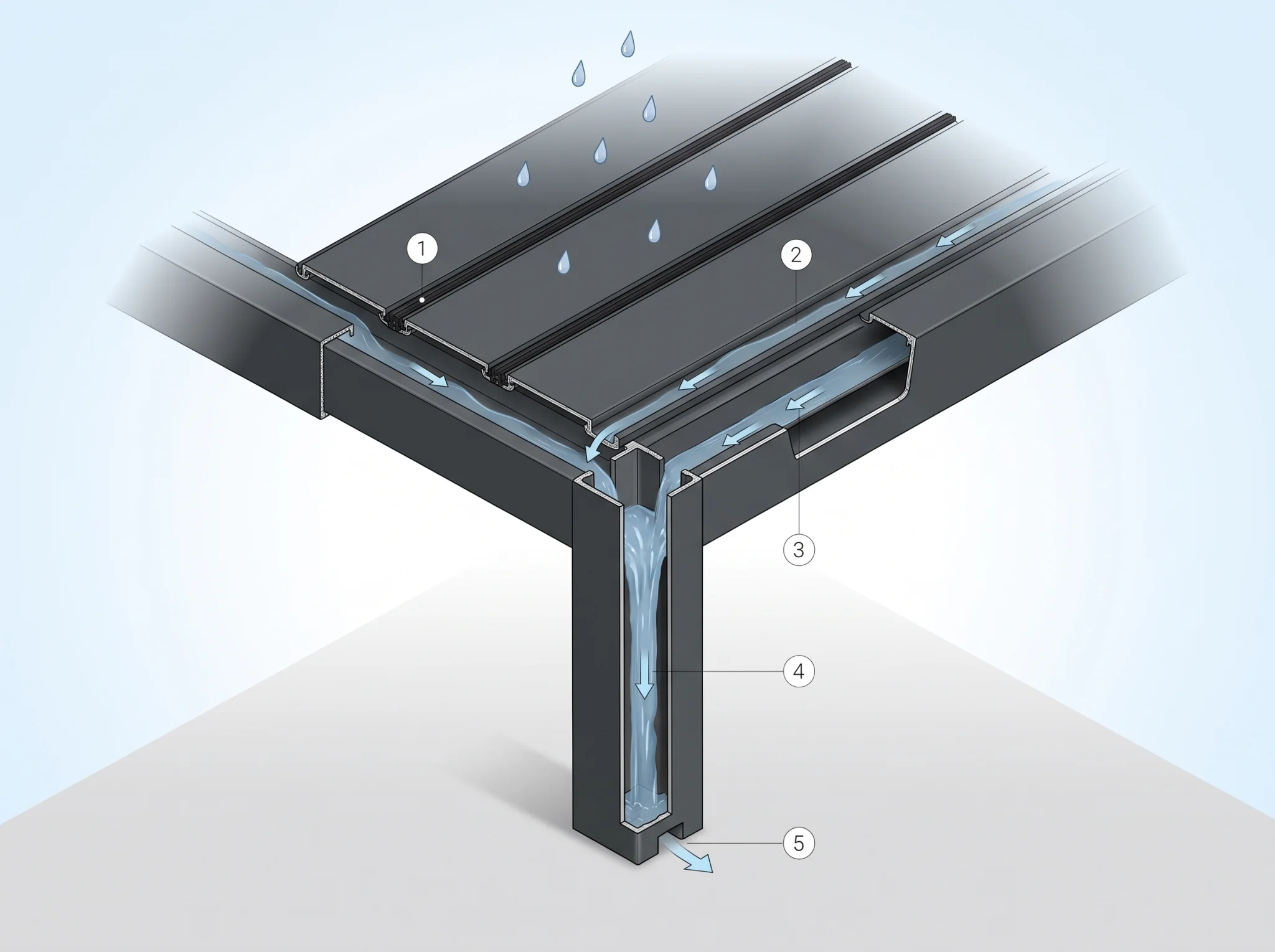
- 1EPDM sealSeals the joint between closed louvres.
- 2Louvre channelCarries water from the top of the louvre to its ends.
- 3Perimeter gutterHidden inside the frame; collects the water.
- 4PostWater runs down inside the post.
- 5Outlet at the footWater is released to the ground or a drain.
Gutter strainers should be cleaned at least twice a year; a blocked gutter can overflow in heavy rain.
System options
Control, lighting and mounting options are confirmed per project at the site survey.
Technical specifications
- Material
- Extruded, powder-coated aluminium
- Louvre movement
- Rotate only
- Louvre angle
- From closed to open, adjustable
- Typical module size
- Set per project; exact size confirmed at the site survey. Larger areas are covered with several modules.
- Drive
- Piston drive
- Drainage
- Integrated gutter, drains through the posts
- Control
- Remote, Wi-Fi, building automation
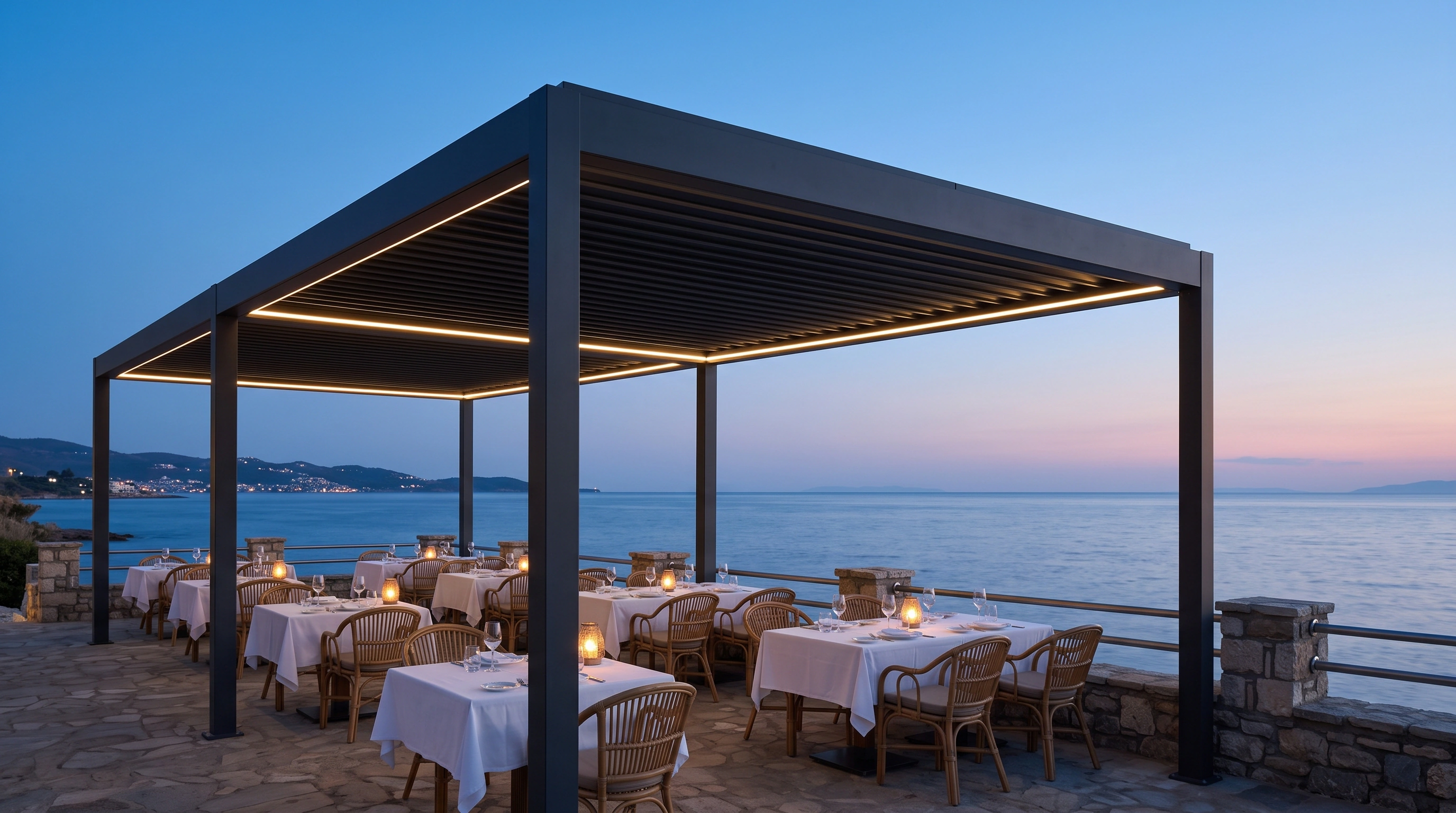
Planned together for commercial terraces
The roof stops the rain; to keep tables in use in winter, the sides need closing too.
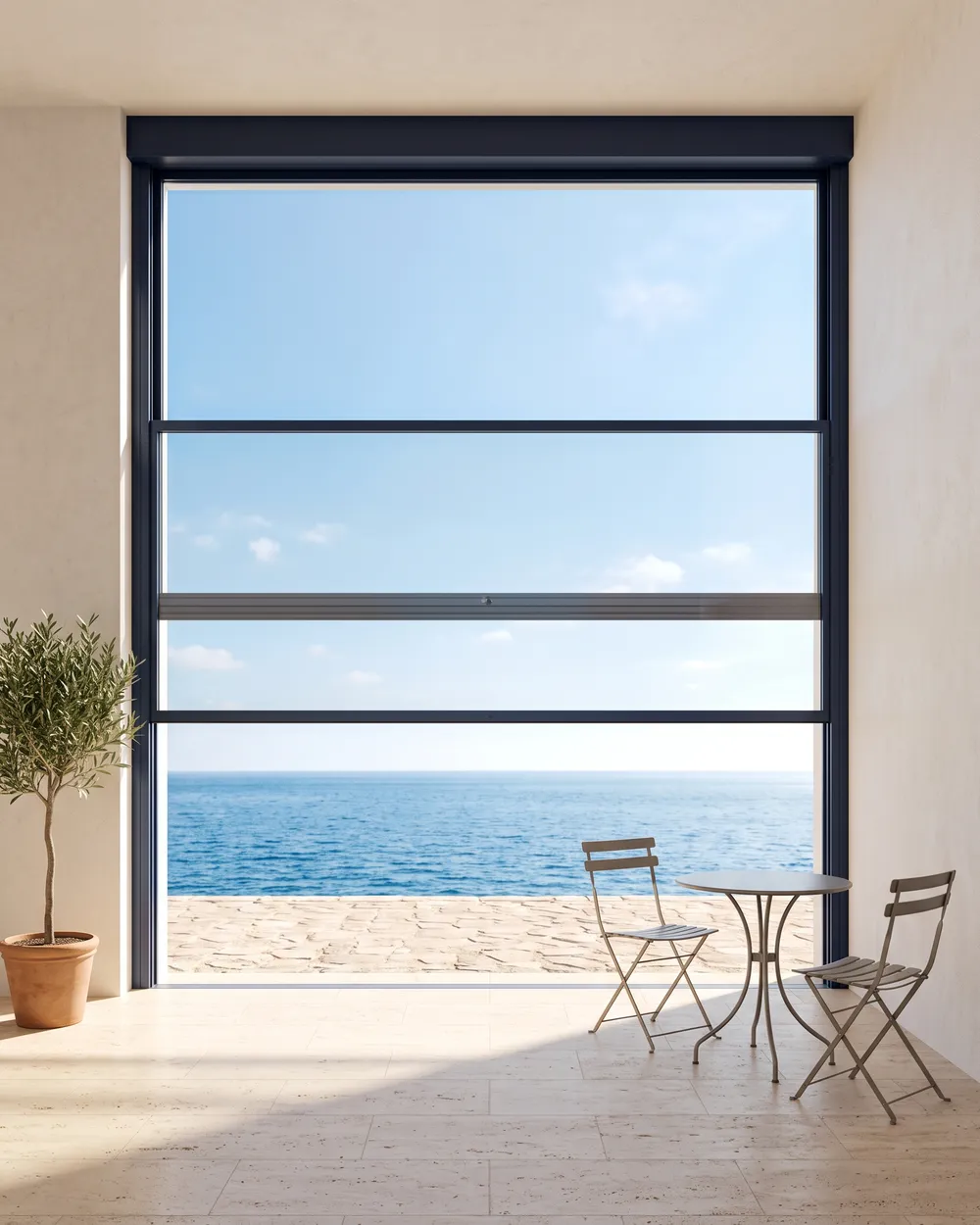
Glass Balcony Systems
Guillotine Glass
Opens and closes vertically by remote control, enclosing the front of the terrace without blocking the view.
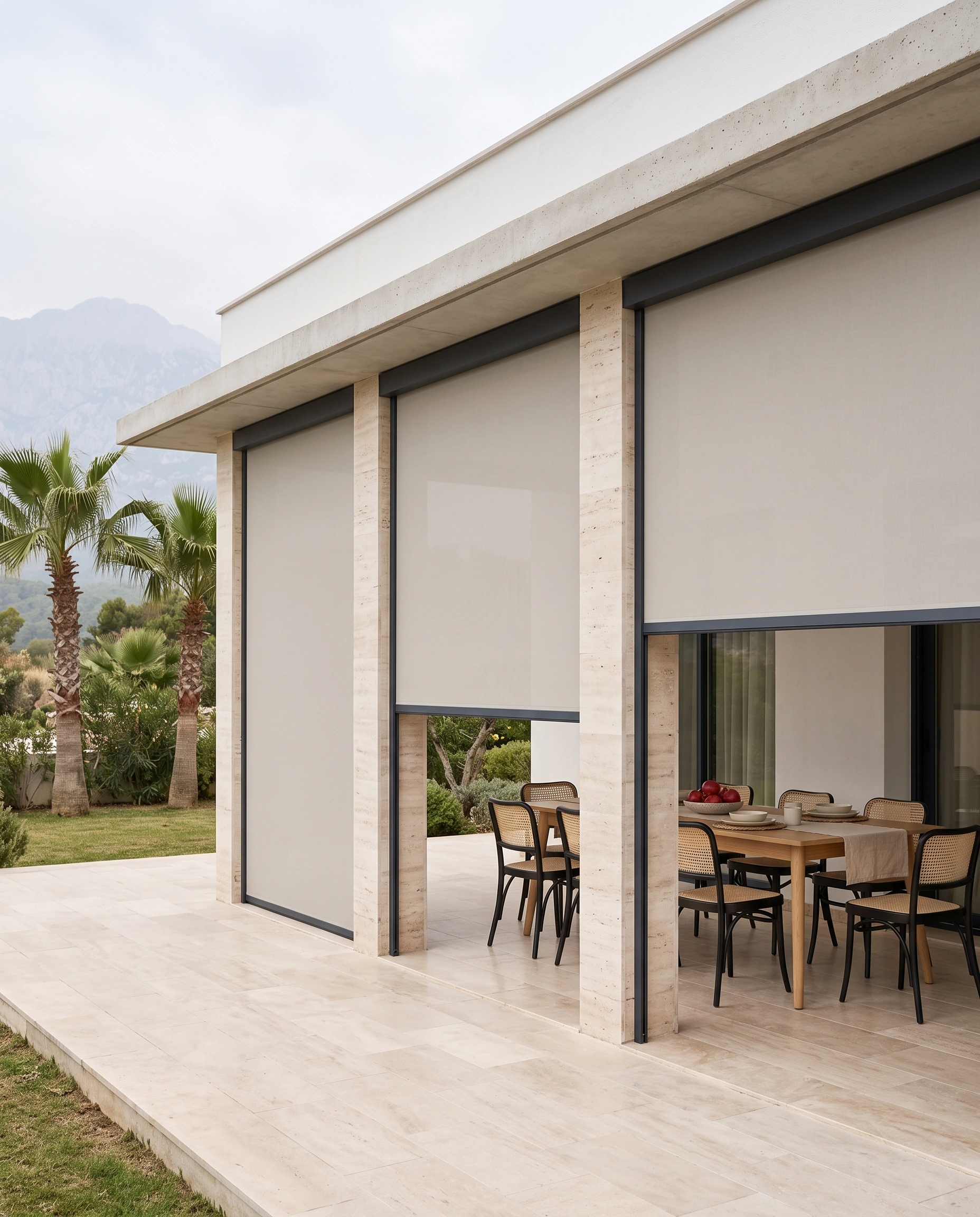
Screens & Shading
Zip Screen
Blocks low evening sun from the west and the wind; rolls up into its cassette when not needed.
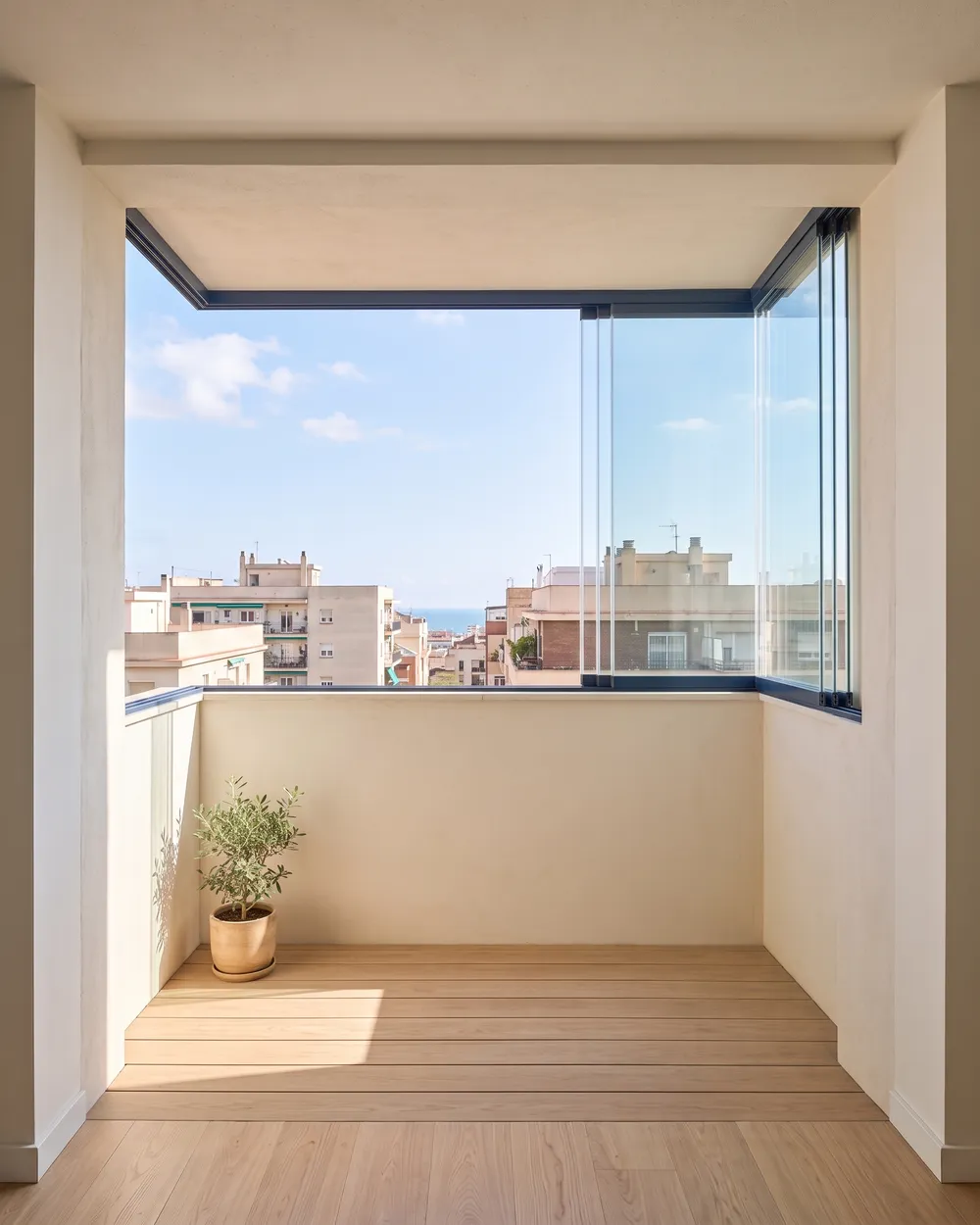
Glass Balcony Systems
Sliding Glass Balcony
On the side and rear, panels slide on tracks and leave openings for entry and service.
Glass and aluminium since 1940.
We produce at our Glass Factory and Architectural Factory in Adana; one dedicated partner from site survey to installation.
2-year system warranty
Production in Adana, showroom in France.
Glass Factory and Architectural Factory in Seyhan, Adana; showroom and warehouse in Bondoufle.
Frequently asked questions about piston bioclimatic roofs
With the louvres closed, the seals keep water out; rain on the louvres runs into the perimeter gutters and down through the posts to the ground. In very heavy downpours, or if leaves block the gutters, they can overflow. If you open the louvres right after the rain, a few remaining drops may fall inside.
A closed roof keeps the rain off and extends the season, but a bioclimatic roof is not an insulated room. Closing the sides with glass systems or zip screens and adding a heater makes a clear difference in winter. If you want to use the space as a room, a winter garden is the better choice.
On most systems the louvres are opened in strong wind to reduce the load on the roof. The louvres should not be moved when iced up, and opening them before expected snow is generally recommended. Rain and wind sensor options are assessed per project at the site survey, together with local wind and snow conditions.
Total area, the model, the number of modules and posts, the mounting type, frame colour, lighting and control options, and any side enclosures. The final price is based on measurements taken on site.
Powder-coated aluminium needs no repainting, but the system is not maintenance-free. Gutters and leaf guards should be cleaned at least twice a year, especially after autumn. Wipe louvres and profiles with water, a neutral cleaner and a soft cloth; avoid abrasive products.
SURVEY & QUOTE
Request an On-Site Survey and Quote
Let us choose the right system for your project together; schedule an on-site survey and measurement.