
 Başaran CamGuide12 min read
Contents
Glass Balcony in an Apartment in Adana: Management Approval, Permits and What to Watch For
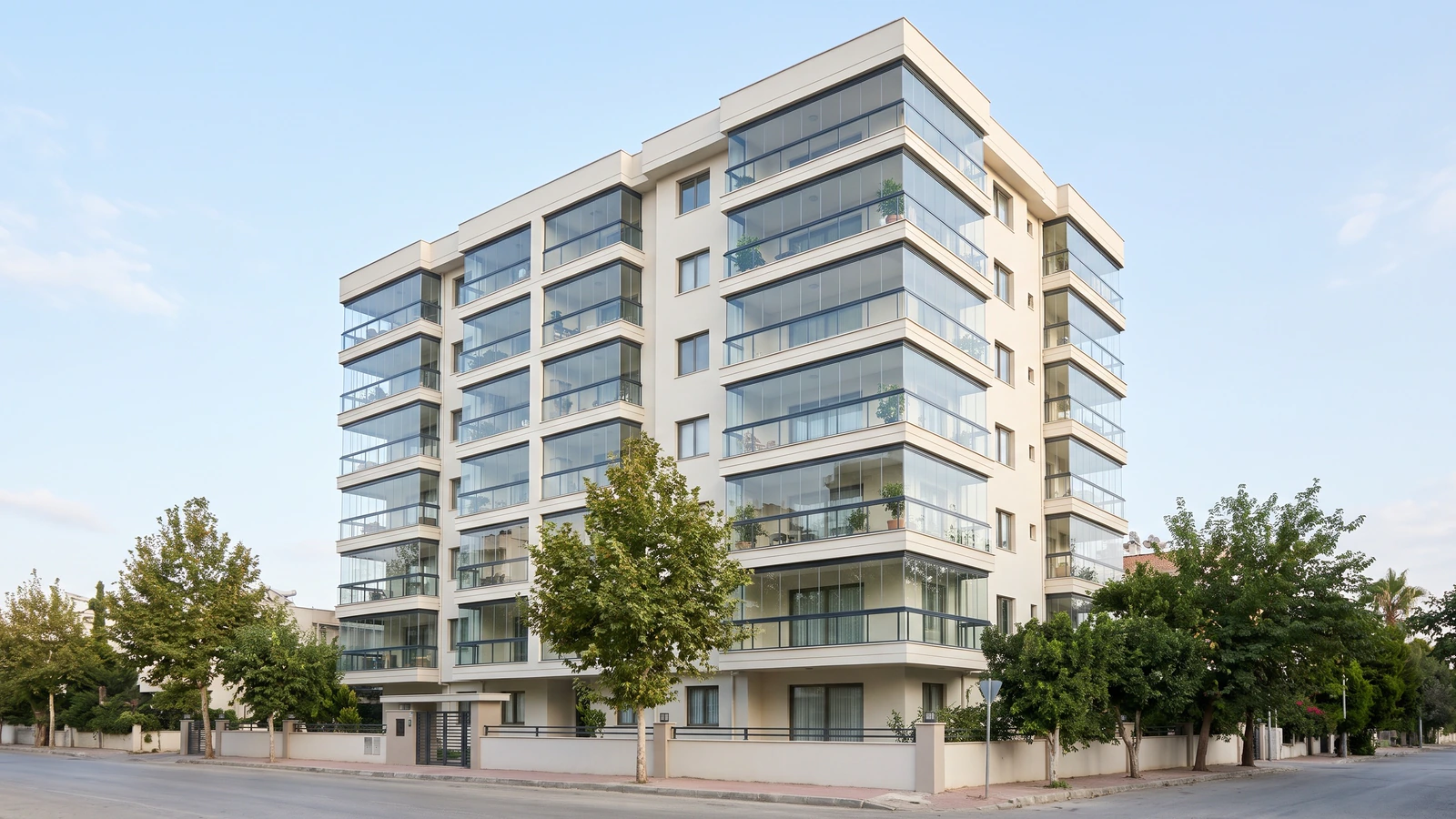
Anyone who wants a glass balcony in an apartment building usually asks the same first question: "Do I need my neighbours' permission?" The short answer is yes. In this article we explain, step by step, how many signatures you need, what the management plan changes, what to do if you are a tenant, and what to watch for if your balcony has a combi boiler (kombi).
Key points
- A folding glass balcony does not need a building permit from the municipality, but under condominium law it needs the written consent of at least four-fifths of all unit owners.
- The four-fifths share is calculated on the total number of independent units in the building, not on the people who attend the meeting.
- If there is a combi boiler on the balcony, a certified natural gas company and the distribution company must be involved before the balcony is closed.
Why does a glass balcony concern the neighbours?
The inside of the balcony belongs to your flat and you use it. But the outer wall around the balcony, the railing line and the way the building looks from outside belong jointly to all unit owners. The glass balcony is fitted to your balcony, but the result is visible on the shared facade.
Article 19 of the Condominium Law No. 634 (Kat Mülkiyeti Kanunu) regulates this clearly: a unit owner cannot carry out construction, repairs, installations or changes in the common areas without the written consent of four-fifths of all unit owners. The courts treat closing a balcony with glass as falling under this rule.
No permit needed, but approval is needed
The most common mistake here is to confuse two separate rules.
Article 59 of the Planned Areas Zoning Regulation (Planlı Alanlar İmar Yönetmeliği) lists openable, folding glass panel systems on balconies among the works that do not require a building permit. So you do not need a permit from the municipality.
But this exemption only governs the relationship between you and the municipality. Your relationship with your neighbours is governed by the Condominium Law. In a decision dated 23.03.2026 (E. 2025/9753, K. 2026/4726), the Court of Cassation (Yargıtay), 5th Civil Chamber, rejected the defence that "no permit is required under the zoning regulation, so neighbour consent is not required either" and upheld the order to restore the balcony to its original condition.
What this means
That no municipal permit is needed does not mean neighbour consent is not needed. They are two separate rules, and you must comply with both.
Does a folding, removable system make a difference?
A view often heard in practice is that a folding, removable glass balcony is "not a fixed structure" and therefore does not need consent. The Court of Cassation's recent decisions do not support this view.
In its decision dated 22.04.2025 (E. 2024/10743, K. 2025/6062), the Court of Cassation 5th Civil Chamber upheld the order to restore to its original state a balcony that had been closed with glass without the written consent of four-fifths of the unit owners. The decision stressed that the duty to follow the approved architectural project is a matter of public order and that the court takes it into account on its own motion. In the same case, it was accepted that the claimant's own balcony being closed did not prevent them from bringing the case.
How is four-fifths calculated?
The four-fifths share is calculated on the total number of independent units (unit owners) in the building, not on the number of people who attend the meeting. For example, in an apartment building with 20 flats, at least 16 unit owners must give written consent, even if only 10 people come to the meeting.
How many signatures do you need?
In a building with 20 independent units, written consent from at least 16 owners is required.
Four fifths of the total, rounded up. The total number of units counts, not the number of people attending the meeting.
Written consent can be collected in two ways:
Decision of the unit owners' assembly
The subject is written clearly on the meeting agenda. The decision is entered in the decision book and the owners who vote in favour sign it. The minutes must show clearly who signed on behalf of which independent unit.
Separate consent form
For owners who cannot attend the meeting, signatures are collected one by one on a text that describes the type, colour and glass type of the system to be installed. The signed texts are handed to the management and kept.
What does the management plan say?
Under Article 28 of the Condominium Law, the management plan is a contract that binds all unit owners, and it also binds those who buy a flat later. Reading the management plan should be the first thing you do before ordering a glass balcony. Three situations are possible:
The plan allows it under certain conditions
Follow the system, colour and limits described in the plan exactly. Get written confirmation from the management. If the wording of the plan is not clear, documenting the four-fifths consent anyway is the safest way.
The plan forbids it
A ban cannot be overcome without changing the management plan. Under Article 28 of the Law, changing the management plan requires the vote of four-fifths of all unit owners.
The plan says nothing
The general rule applies: the written consent of at least four-fifths of all unit owners must be obtained.
Check your own situation
Answer a few short questions below. We will show you the order of steps that suits you.
Check your situation
What happens if a neighbour or the management objects?
If a glass balcony is built without the required consent, a case can be brought for interference with the common areas. Any unit owner can bring this case alone, whatever their land share (arsa payı). It makes no difference if the other neighbours are happy or stay silent.
Since 1 September 2023, applying to a mediator is compulsory before bringing a case in disputes arising from the Condominium Law (Law No. 6325, Art. 18/B). If no agreement is reached in mediation, the case is heard by the magistrates' civil court (sulh hukuk mahkemesi) in the place where the property is located.
If the court finds a violation, it can order the glass balcony to be removed and the balcony restored to its original condition. In that case, not only the money paid for the glass balcony but also court costs and the other side's attorney's fees may come into play.
What this means
Building without consent can be both more expensive and more tiring than getting consent at the start. Talk to your neighbours before the installation.
If you are a tenant
Under Article 321 of the Turkish Code of Obligations (Türk Borçlar Kanunu), a tenant can make renovations and changes in the rented property only with the landlord's written consent. So you must first get written permission from your landlord.
The landlord's consent does not replace the four-fifths consent of the other unit owners. The person responsible to the unit owners' assembly is the landlord. So the request must be passed to the management through the landlord, and installation should begin only after both approvals are obtained.
What happens when the lease ends is regulated in the same article. A landlord who has given written consent to the change cannot demand restoration to the original state, unless agreed otherwise in writing. The tenant also cannot demand payment for any increase in value created by the change, unless agreed otherwise. It is best for both sides to settle costs and removal in writing from the start.
If there is a combi boiler on the balcony
In Adana, a large share of combi boilers stand on open balconies. When an open balcony is closed, it becomes an enclosed space under natural gas regulations. According to the internal installation information of Aksa Doğalgaz, Adana's natural gas distribution company:
Certified company first
Before the closing works, a certified company must be contacted and the distribution company must be informed. The renovation project must be prepared and submitted to the distribution company for approval.
The flue must stay outside
The flue outlet of the appliance on the balcony must not be left inside the enclosed area. It must go directly to the outside. This work must be done by a certified company.
Do not block the vent
The outward-facing surface of the closed balcony must have a suitable ventilation vent. Vents in places with a fuel-burning appliance must never be closed.
One system for the whole building
In buildings with many flats, the cleanest solution is to regulate the glass balcony with a single decision for the whole building, not flat by flat. With the written consent of four-fifths in the unit owners' assembly, the following points can be fixed:
- System type (for example, folding glass balcony)
- Profile colour (RAL code)
- Glass colour and thickness
- Limits for the railing and facade alignment
With such a decision, the unity of the facade is protected and each owner does not have to collect signatures separately. But the decision only draws a frame. Work that goes beyond what the decision describes can still count as unauthorised.
You can download a sample decision text below. Do not use it without adapting it to your own building and showing it to a lawyer.
Step-by-step process
Get the management plan from the land registry office (tapu müdürlüğü) or from the management, and check whether it has a provision about balconies. If you are a tenant, get written permission from your landlord.
If there is a combi boiler on the balcony, talk to a certified natural gas company.
Have a site survey done. The system type, profile colour, glass type and how it will look from the facade should be clear.
Have the subject put on the agenda of the unit owners' assembly, or prepare a consent form.
Get written approval from at least four-fifths of the total number of independent units and keep the documents.
Have the installation done without going beyond the railing and facade alignment.
Frequently asked questions
Yes. Although folding glass panels do not need a building permit from the municipality, the outer facade counts as a common area. Under Article 19 of the Condominium Law, the written consent of at least four-fifths of all unit owners is required.
No. The share is calculated on the total number of independent units in the building. In a building with 20 flats, the written consent of at least 16 unit owners is required.
Yes. The fact that others built without consent gives you no right. The safest way is an assembly decision that regulates one type of glass balcony for the whole building.
Any unit owner can bring a case alone. Applying to a mediator before bringing a case is compulsory. If there is no agreement, the case is heard in the magistrates' civil court.
Yes. In its decision dated 22.04.2025, the Court of Cassation 5th Civil Chamber accepted that the claimant's own balcony being closed did not prevent them from bringing the case.
Not without the landlord's written consent (Turkish Code of Obligations, Art. 321). The landlord's consent also does not replace the four-fifths consent of the other unit owners.
It can, but a certified natural gas company must be contacted first and the distribution company must be informed. The flue must go to the outside and the balcony must have a ventilation vent that is not closed.
No. Removing the wall or the frame between the balcony and the room means a change to the project. In this case a permit from the municipality is needed, and the consent of the unit owners is bound to heavier conditions. Talk to a lawyer and an architect before starting such work.
This article is based on the Condominium Law No. 634, the Turkish Code of Obligations No. 6098, the Law No. 6325 on Mediation in Civil Disputes, the Planned Areas Zoning Regulation and the Court of Cassation decisions mentioned in the text. Legislation and case law may change. This article is not legal advice.
Sources
- 634 sayılı Kat Mülkiyeti Kanunu (m. 19, m. 28, m. 33) (Condominium Law No. 634, in Turkish)
- 6098 sayılı Türk Borçlar Kanunu (m. 321) (Turkish Code of Obligations No. 6098, in Turkish)
- 6325 sayılı Hukuk Uyuşmazlıklarında Arabuluculuk Kanunu (m. 18/B) (Law on Mediation in Civil Disputes, in Turkish)
- Planlı Alanlar İmar Yönetmeliği (m. 59) (Planned Areas Zoning Regulation, in Turkish)
- Yargıtay 5. HD, E. 2024/10743, K. 2025/6062, 22.04.2025 (karar özeti) (decision summary, in Turkish)
- Yargıtay 5. HD, E. 2025/9753, K. 2026/4726, 23.03.2026 (karar özeti) (decision summary, in Turkish)
- Aksa Doğalgaz, İç Tesisat Sıkça Sorulan Sorular (internal installation FAQ, in Turkish)
Related products
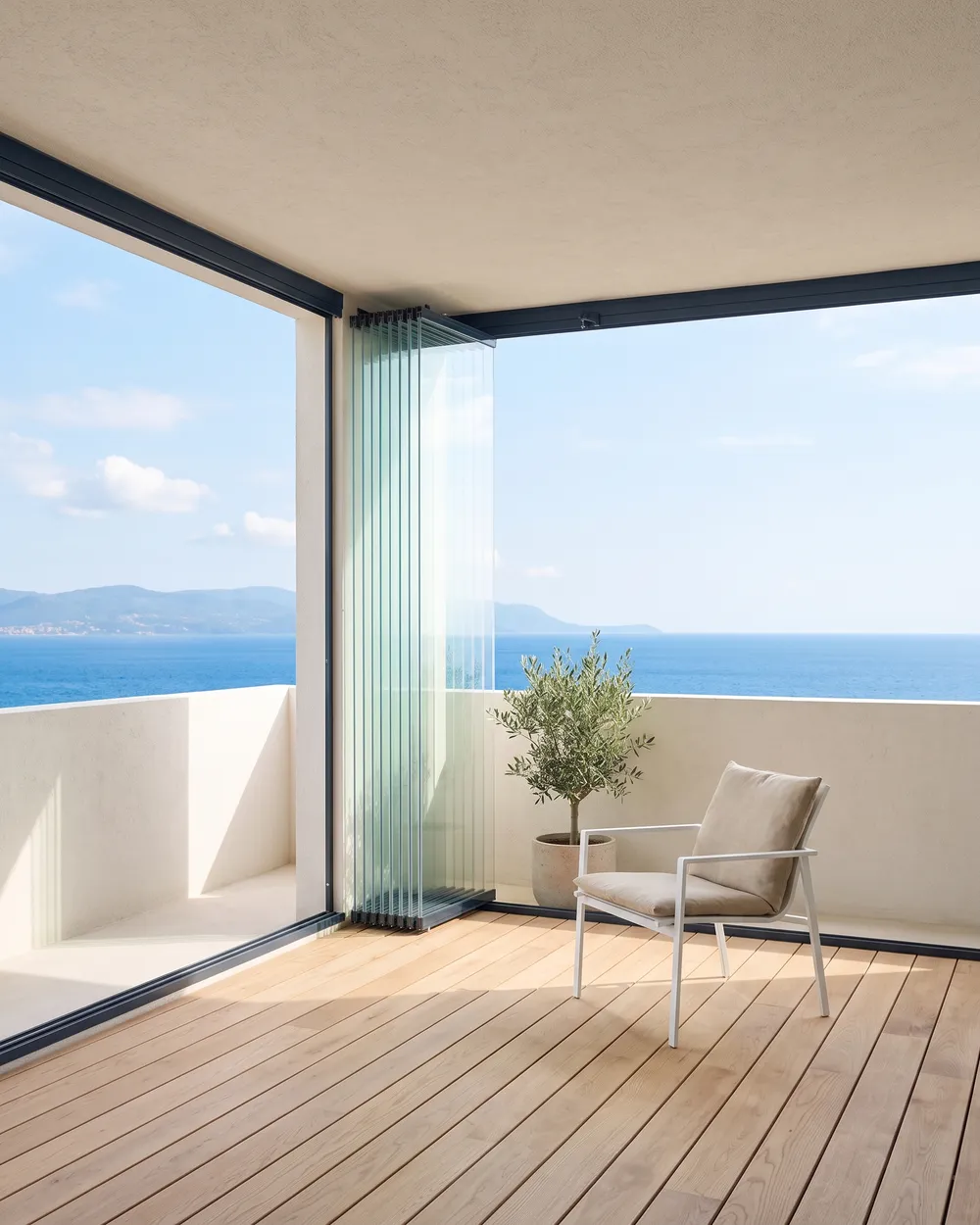
Folding Glass Balcony
Panels slide, turn and stack in one corner, opening up almost the entire balcony.
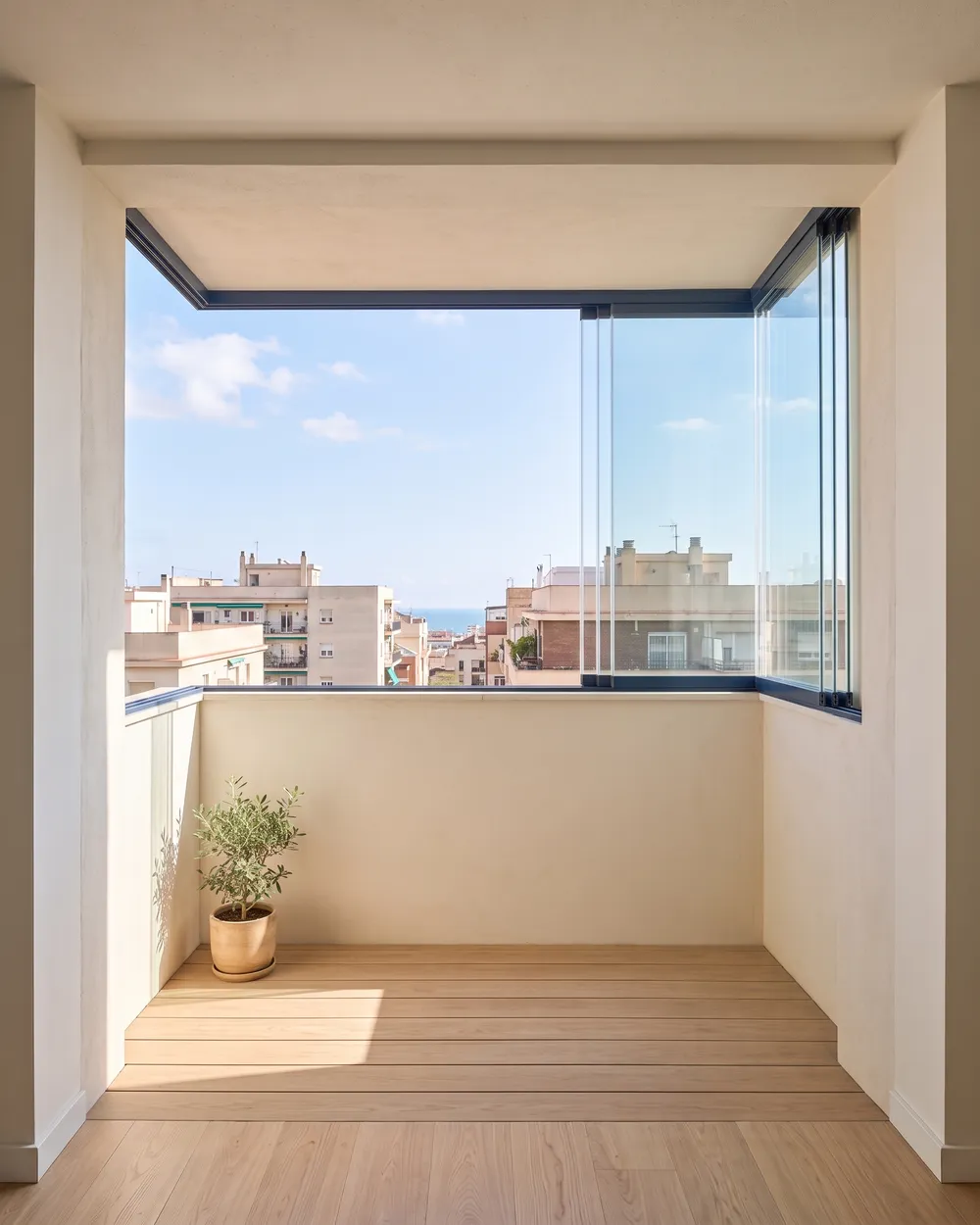
Sliding Glass Balcony
Panels run horizontally on tracks and never swing inwards, so narrow balconies keep their space.

Glass Balcony Systems
Four-season use and uninterrupted views; single glazing or insulated double glazing.
Other articles
Are you preparing a single glass balcony decision for your building? During the site survey we will fix the system type, profile colour and glass type, and prepare a quotation you can use at the assembly meeting.